Were or Where? Simple Rules, Clear Examples, and Usage Guide
February 2, 2026
Few English word pairs confuse writers as much as were or where. They look similar, sound close when spoken quickly, and often appear in the same types of sentences. This is why thousands of people search for “were or where” every month—students, professionals, bloggers, and even native speakers want a fast, clear answer. A small spelling mistake can change the meaning of a sentence or make writing look unprofessional.
The confusion usually happens because were is a verb, while where is related to place. When writing emails, social media posts, school assignments, or formal documents, choosing the wrong word can lead to misunderstandings. For example, “They were happy” and “They where happy” look similar, but only one is correct. Likewise, “Where are you?” has a very different purpose than “Were are you?” (which is incorrect).
This guide solves that confusion once and for all. You’ll get a quick answer, clear rules, real-life examples, common mistakes, and professional advice on which word to use and when. By the end, you’ll never hesitate between were or where again.
Were or Where – Quick Answer
Were is a verb. It is the past tense of are and is also used in hypothetical sentences.
Where is an adverb or conjunction related to place or location.
Examples:
- They were late to the meeting.
- I were you, I would apologize.
- Where are my keys?
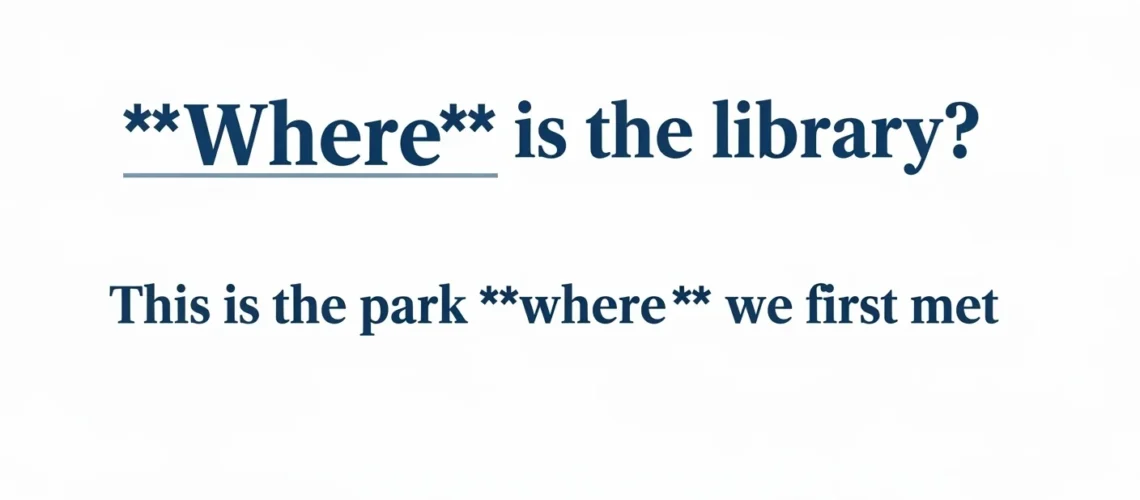
- This is the café where we met.
Simple rule:
If you are talking about state, condition, or past action, use were.
If you are talking about place or location, use where.
The Origin of Were or Where
The word were comes from Old English wǣron, the past plural form of “to be.” Over time, it became part of modern English grammar as the past tense of are and is in certain cases. It also survived in the subjunctive mood, which is why we still say, “If I were rich.”
The word where comes from Old English hwǣr, meaning “at what place.” It has always been linked to location, position, or situation.
The spelling differences exist because these words come from different roots and serve different grammatical roles. They only seem confusing today because English pronunciation evolved while spellings stayed similar.
British English vs American English Spelling
There is no spelling difference between British and American English for were or where. Both follow the same rules in all major English varieties.
Comparison Table
| Aspect | Were | Where |
| Part of Speech | Verb | Adverb / Conjunction |
| Meaning | Past or hypothetical state | Place or location |
| US English | Same usage | Same usage |
| UK English | Same usage | Same usage |
| Example | They were ready | Where are you? |
Which Spelling Should You Use?
Choose based on meaning, not region.
- US audience: Follow standard grammar rules. Meaning decides the word.
- UK & Commonwealth audience: Same rules apply.
- Global audience: Focus on clarity. Ask yourself if the sentence refers to a state or a place.
Quick test:
Can you replace the word with “are” or “were”? Use were.
Can you replace it with “at what place”? Use where.
Common Mistakes with Were or Where
Here are frequent errors and how to fix them:
- ❌ Where you happy yesterday?
✅ Were you happy yesterday? - ❌ They were is my office.
✅ They were in my office. - ❌ This is were I live.
✅ This is where I live. - ❌ Were did you go?
✅ Where did you go?
Remember: were = condition, where = place.
Were or Where in Everyday Examples
Emails:
- We were informed about the delay.
- Please tell me where the files are saved.
News:
- Protesters were gathered outside the building.
- The city where the event happened is expanding.
Social Media:
- You were amazing today!
- Where did you buy that jacket?
Formal Writing:
- If the policy were applied correctly, results would improve.
- The region where the study was conducted shows growth.
Were or Where – Google Trends & Usage Data
Search data shows that “were or where” is popular in English-learning countries like India, Pakistan, the Philippines, and Nigeria. It is also commonly searched in the US and UK by students and content writers.
- Were appears more in grammar-related searches.
- Where is common in question-based searches.
This trend shows strong learning intent, meaning users want clear rules and quick answers.
Comparison Table: Were vs Where
| Feature | Were | Where |
| Type | Verb | Adverb / Conjunction |
| Talks About | State, action, condition | Place, location |
| Example | They were tired | Where is the station? |
| Grammar Role | Past / subjunctive | Question / connector |
FAQs about Were or Where
1. Is “were” always past tense?
Mostly yes, but it is also used in hypothetical sentences like “If I were you.”
2. Can “where” be used in statements?
Yes. Example: “This is the place where we met.”
3. Is “were” used with I?
Yes, in hypotheticals: “If I were rich.”
4. Can I replace “where” with “there”?
Sometimes, but only when talking about location.
5. Do British and American English use them differently?
No. The rules are the same.
6. Why do people confuse were and where?
They look similar and sound close in fast speech.
7. Is “where were you” correct?
Yes. It uses both words correctly.
Conclusion
Understanding the difference between were or where is easier than it seems once you focus on meaning. Were is about a state, condition, or past action. Where is about place or location. They are not interchangeable, and choosing the wrong one can change the meaning of your sentence or make it grammatically incorrect.
There is no British or American spelling difference to worry about. The rules are global and consistent. Whether you are writing an email, posting on social media, or working on formal content, a quick meaning check will guide you to the correct choice. Ask yourself: “Am I talking about a condition or a place?” That single question solves most mistakes.
By using the examples, tables, and rules in this guide, you can write with confidence and clarity. Once you master were or where, your English will look more natural, professional, and polished.

Ross Raisin is a British author known for emotionally powerful novels, strong sense of place, rural themes, and deeply human storytelling.