Preventive or Preventative? The Correct Spelling, Meaning, and Usage Explained
February 2, 2026
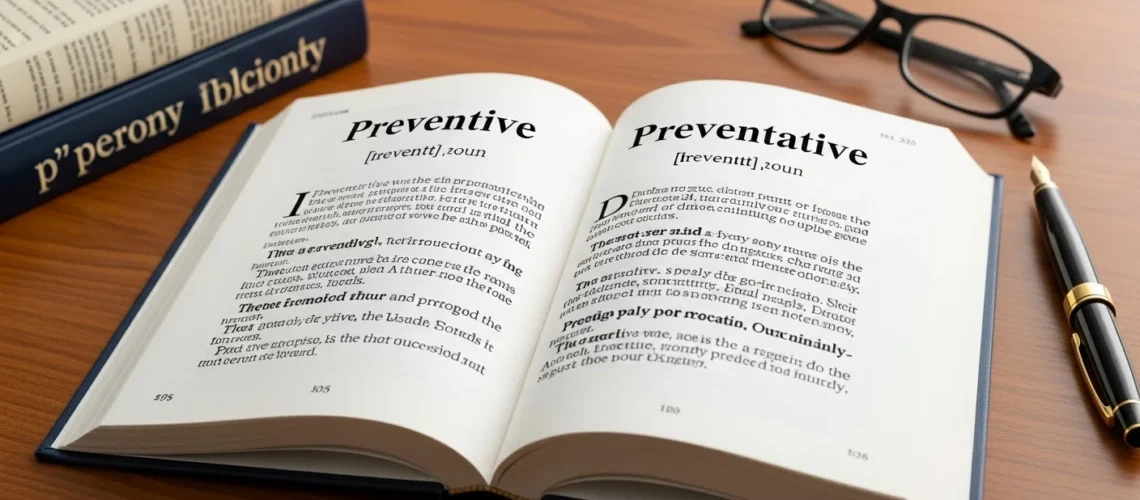
Have you ever paused while writing preventive or preventative and wondered which one is correct? You’re not alone. This is one of the most searched spelling questions in English, especially in healthcare, business, insurance, and everyday writing. Both words appear in dictionaries, both look right, and both are widely used—but they are not equal in usage or preference.
People search for “preventive or preventative” because they want clarity. Is one American and the other British? Is one wrong? Does using the longer version sound more professional? The confusion often comes from English words that evolve differently over time, with extra letters added without changing meaning.
This article solves that confusion clearly and quickly. You’ll get a direct answer, historical background, spelling differences across regions, real-life examples, common mistakes, and professional advice on which spelling to choose. Whether you’re writing an email, blog post, medical document, or academic paper, this guide will help you use the correct form with confidence—and avoid looking uncertain or inconsistent.
Preventive or Preventative – Quick Answer
Both preventive and preventative are correct and mean the same thing: something that helps stop a problem before it happens.
Examples:
- Preventive care reduces long-term health risks.
- Preventative measures were taken before the storm.
However, preventive is the more widely accepted and preferred spelling, especially in professional and formal writing.
The Origin of Preventive or Preventative
The word comes from the Latin praevenire, meaning to come before or to stop in advance.
Originally, prevent entered English in the 15th century. Soon after, preventive appeared as the standard adjective form.
The longer form preventative developed later. English sometimes adds extra syllables for rhythm or emphasis, even when they are not needed. This is similar to how orient became orientate in some regions.
Over time, both forms stayed in use, but preventive remained closer to the original word structure and became the dominant spelling in formal contexts.
British English vs American English Spelling
Unlike many spelling debates, this is not strictly UK vs US.
- American English: Strongly prefers preventive
- British English: Uses both, but preventive is still more common
- Medical and academic writing: Almost always preventive
Comparison Table
| Region | Preferred Spelling | Example |
| United States | Preventive | Preventive healthcare |
| United Kingdom | Preventive (also preventative) | Preventive action |
| Canada | Preventive | Preventive maintenance |
| Australia | Preventive | Preventive policy |
| Global English | Preventive | Preventive strategy |
Which Spelling Should You Use?
Choose based on your audience:
- US audience: Use preventive
- UK/Commonwealth audience: Preventive is safest
- Global or professional audience: Always use preventive
- Casual writing: Either is acceptable, but be consistent
Professional rule:
If in doubt, use preventive. It is shorter, clearer, and more widely accepted.
Common Mistakes with Preventive or Preventative
❌ Mixing both spellings in the same document
✅ Pick one and stay consistent
❌ Assuming preventative is more formal
✅ Preventive is actually preferred in formal writing
❌ Thinking one is incorrect
✅ Both are correct, but not equally popular
❌ Overusing the longer form for emphasis
✅ Extra letters do not add clarity
Preventive or Preventative in Everyday Examples
Emails:
- We recommend preventive maintenance to avoid future issues.
News:
- Doctors stress the importance of preventive care.
Social Media:
- Preventive habits save time and money.
Formal Writing:
- Preventive strategies were implemented to reduce risk.
Preventive or Preventative – Google Trends & Usage Data
Search data shows preventive is searched far more often worldwide.
It dominates in:
- Healthcare
- Insurance
- Technology
- Academic writing
Preventative appears more in informal writing and speech, mainly in the US and UK, but its usage is declining in professional content.
Keyword Comparison Table
| Keyword | Popularity | Professional Use |
| Preventive | Very High | Strongly Preferred |
| Preventative | Moderate | Limited |
Frequently Asked Questions (FAQs)
1. Are preventive and preventative interchangeable?
Yes, they mean the same thing.
2. Is preventative incorrect?
No, it is correct but less preferred.
3. Which spelling do doctors use?
Preventive.
4. Is preventive more formal?
Yes, especially in academic and professional writing.
5. Why does preventative exist at all?
English often adds extra syllables over time without changing meaning.
6. Which spelling is better for SEO?
Preventive has higher search volume.
7. Can I use both in one article?
No. Choose one for clarity and consistency.
Conclusion
The debate over preventive or preventative is more about preference than correctness. Both words are valid, both mean the same thing, and both appear in dictionaries. However, usage trends, professional standards, and clarity all point to one clear winner: preventive.
If you want to sound clear, modern, and professional—especially in healthcare, business, or academic writing—preventive is the best choice. It aligns with global English usage, performs better in search results, and avoids unnecessary complexity. The longer form, preventative, is not wrong, but it adds letters without adding meaning.
In short:
✔ Use preventive for clarity and consistency
✔ Be audience-aware
✔ Avoid mixing spellings
Make your writing simple, direct, and confident—and choose the form that most readers expect.