Honor or Honour: Which Spelling Is Correct and When to Use It?
February 2, 2026
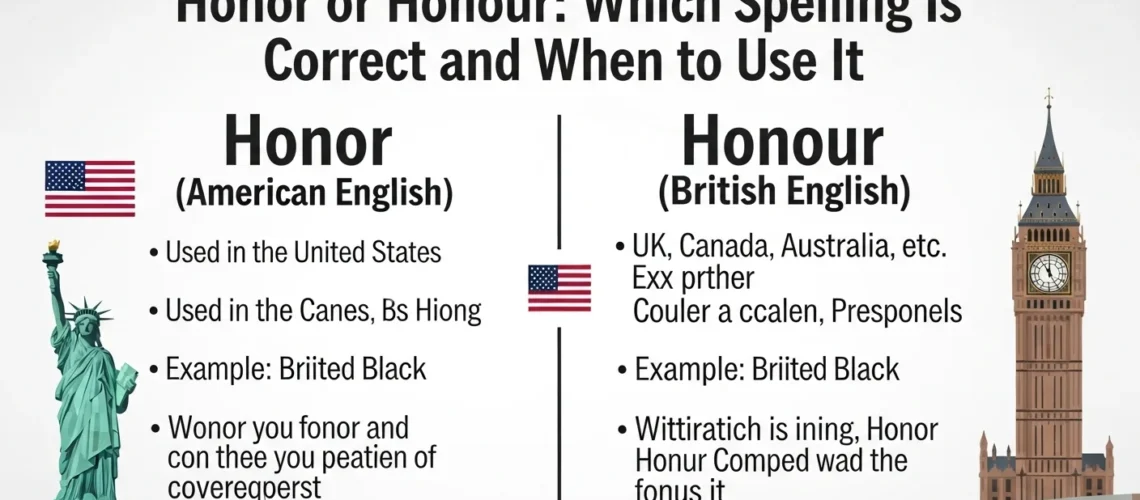
Have you ever paused while writing and wondered: is it “honor” or “honour”? You’re not alone. This is one of the most searched spelling questions in English, especially for writers, students, professionals, and ESL learners. The confusion usually appears when switching between American and British English—or when writing for a global audience. Both spellings look correct. Both appear in books, news articles, and official documents. So why do two versions exist, and which one should you use?
People search for honor or honour because they want clarity. They worry about sounding unprofessional, losing marks in exams, or using the wrong spelling in emails, blogs, or legal writing. This article solves that confusion fast. You’ll get a clear answer, learn where the spellings come from, see how British and American English differ, and understand which spelling fits your audience best. By the end, you’ll know exactly when to use honor and when honour—with confidence.
Honor or Honour – Quick Answer
Both honor and honour are correct.
The difference depends on regional spelling rules.
- Honor → American English (USA)
Example: It is an honor to meet you. - Honour → British English (UK, Canada, Australia)
Example: She received an honour for her service.
The meaning is the same in both cases.
The Origin of Honor or Honour
The word comes from the Latin “honor”, meaning respect, dignity, or reputation. It entered English through Old French as “honour.” For centuries, English used the -our spelling.
In the early 1800s, American lexicographer Noah Webster simplified many spellings to make English more consistent. He removed silent letters, changing honour to honor, colour to color, and favour to favor.
That reform created today’s difference. British English kept the traditional spelling. American English adopted the shorter one.
British English vs American English Spelling
The key rule is simple:
- British English keeps -our
- American English drops the -u
Examples
| British English | American English |
| honour | honor |
| colour | color |
| favour | favor |
| labour | labor |
Both systems are correct. Consistency matters more than choice.
Which Spelling Should You Use?
Choose based on your audience:
- United States: Use honor
- UK, Canada, Australia, New Zealand: Use honour
- Global or mixed audience:
Pick one style and stay consistent. Many global brands prefer American spelling.
For exams, follow the spelling style required by your institution.
Common Mistakes with Honor or Honour
Here are frequent errors to avoid:
- ❌ Mixing styles in one document
✔️ Use either honor or honour, not both. - ❌ Thinking one spelling is wrong
✔️ Both are correct in the right context. - ❌ Changing spelling mid-sentence
✔️ Stay consistent throughout.
Honor or Honour in Everyday Examples
Emails:
- It is an honor to work with your team.
- It is an honour to accept your invitation.
News:
- The soldier was awarded the highest honor.
- She received an honour from the Queen.
Social Media:
- Proud and honored today!
- Such an honour to be recognized.
Formal Writing:
- Academic honor codes must be followed.
- He acted with honesty and honour.
Honor or Honour – Google Trends & Usage Data
Search data shows clear regional patterns:
- Honor is most searched in the United States
- Honour dominates in the UK, Canada, Australia
- Both spike during awards seasons, graduations, and legal searches
Context matters too. Legal and academic users search more often for the correct spelling.
Honor or Honour – Side-by-Side Comparison
| Feature | Honor (US) | Honour (UK) |
| Correct spelling | ✅ Yes | ✅ Yes |
| Region | USA | UK & Commonwealth |
| Meaning | Respect | Respect |
| Formal use | Yes | Yes |
FAQs About Honor or Honour
1. Is “honor” wrong in British English?
No, but honour is preferred.
2. Is “honour” wrong in American English?
It’s understandable, but honor is standard.
3. Do both spellings mean the same thing?
Yes, the meaning is identical.
4. Which spelling should I use in exams?
Follow the required English style.
5. Can I use both spellings online?
Yes, but stay consistent in one piece of writing.
6. Is one spelling more formal?
No. Both are equally formal.
7. Which spelling is better for SEO?
Use the spelling your target audience searches for.
Conclusion
The honor or honour debate is not about right or wrong—it’s about where and who you are writing for. Both spellings share the same meaning, history, and importance. American English favors honor, while British and Commonwealth English prefer honour. The key rule is consistency. Pick one style and use it throughout your writing.
If your audience is in the United States, use honor. If you’re writing for the UK or similar regions, choose honour. For global content, either works, but American spelling is often more widely accepted online. Understanding this difference helps you write clearly, look professional, and avoid unnecessary corrections. Once you know the rule, the choice becomes easy—and your writing becomes stronger.

Ross Raisin is a British author known for emotionally powerful novels, strong sense of place, rural themes, and deeply human storytelling.