Ambiance or Ambience: Which Spelling Is Correct and When to Use It?
January 30, 2026
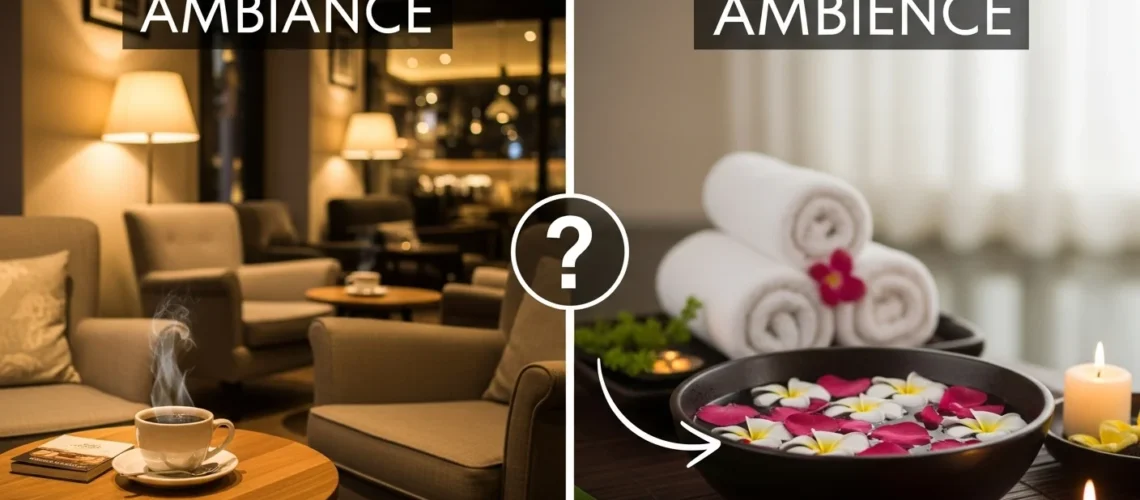
You may have seen both ambiance and ambience used to describe the mood of a place—a cozy café, a romantic restaurant, or a calm office. If they look confusing, you’re not alone. Many people search for “ambiance or ambience” because they want to know which spelling is correct, whether one is wrong, or if the meaning changes at all.
This confusion often appears when writing blogs, reviews, emails, or professional content. Spellcheck tools don’t always help, because both spellings are correct. The real difference lies in regional usage, not meaning.
Understanding when to use ambiance versus ambience can make your writing look more polished and intentional. It also helps if you write for an international audience or care about SEO, branding, or professional tone.
In this guide, you’ll get a quick answer, clear examples, spelling rules, common mistakes, real-life usage, and trend insights. By the end, you’ll know exactly which spelling to choose—and why.
Ambiance or Ambience – Quick Answer
Both “ambiance” and “ambience” mean the same thing.
They describe the mood, atmosphere, or feeling of a place.
- Ambiance → Preferred in American English
- Ambience → Preferred in British English
Examples:
- The restaurant has a warm ambiance. (US)
- The café has a relaxed ambience. (UK)
Meaning does not change—only spelling does.
The Origin of Ambiance or Ambience
Both words come from the French word ambiance, meaning “surrounding atmosphere.”
The term entered English in the 19th century, mainly through literature and art writing. Over time, English speakers adapted the spelling in different ways:
- British English kept the French-style -ence ending → ambience
- American English simplified it to -ance → ambiance
This spelling split is common in English, similar to:
- Defence / Defense
- Licence / License
The difference exists because English evolved separately in the UK and the US.
British English vs American English Spelling
| Feature | Ambiance | Ambience |
| English Type | American English | British English |
| Meaning | Mood or atmosphere | Mood or atmosphere |
| Common in | USA, marketing, hospitality | UK, academia, formal writing |
| SEO Use | Higher in US searches | Higher in UK searches |
| Correct? | Yes | Yes |
Key point: Choose spelling based on audience, not preference.
Which Spelling Should You Use?
Use the spelling that fits your audience location:
- US audience → Ambiance
- UK audience → Ambience
- Australia, Canada, NZ → Usually Ambience
- Global or SEO content → Pick one and stay consistent
💡 Tip: If your brand uses American spelling (color, center), use ambiance.
Common Mistakes with Ambiance or Ambience
Here are frequent errors to avoid:
- ❌ Mixing spellings in one article
✅ Stay consistent throughout - ❌ Thinking one spelling is wrong
✅ Both are correct - ❌ Using different spellings in headings and body
✅ Match everywhere - ❌ Assuming meaning changes
✅ Meaning is always the same
Ambiance or Ambience in Everyday Examples
Emails:
- “The office ambiance feels welcoming.”
News:
- “The city’s festive ambience attracted tourists.”
Social Media:
- “Love the cozy ambiance here ☕”
Formal Writing:
- “Lighting plays a key role in workplace ambience.”
Ambiance or Ambience – Google Trends & Usage Data
Search trends show clear regional patterns:
- Ambiance is more popular in the United States
- Ambience dominates searches in the UK and Commonwealth
- Hospitality, interior design, and reviews use both often
For SEO:
- US websites rank better with ambiance
- UK sites rank better with ambience
Using the right spelling helps match user intent and location.
Ambiance vs Ambience – Comparison Table
| Aspect | Ambiance | Ambience |
| Meaning | Atmosphere, mood | Atmosphere, mood |
| Language | American English | British English |
| Correct Usage | Yes | Yes |
| Regional Preference | USA | UK, Commonwealth |
| SEO Focus | US traffic | UK traffic |
FAQs: Ambiance or Ambience
1. Are ambiance and ambience the same word?
Yes. They have the same meaning.
2. Is ambience more formal than ambiance?
No. Both are equal in formality.
3. Which spelling is correct in academic writing?
Use ambience in UK-based academics, ambiance in US-based.
4. Can I use both spellings in one article?
No. Choose one and stay consistent.
5. Which spelling is better for SEO?
It depends on your target country.
6. Do dictionaries accept both spellings?
Yes. Major dictionaries list both.
7. Does pronunciation change?
No. Both are pronounced the same.
Conclusion
The debate over ambiance or ambience is not about meaning—it’s about location and audience. Both spellings describe the same thing: the mood or atmosphere of a place. The only difference lies in regional spelling rules.
If you write for an American audience, use ambiance. If your readers are in the UK or Commonwealth, ambience is the better choice. For global content, consistency matters more than the spelling itself.
Understanding this distinction helps improve clarity, professionalism, and SEO performance. It also shows attention to detail—something readers and search engines both appreciate.
In short, neither spelling is wrong. The right choice depends on who you’re writing for and where your content will be read.

Ross Raisin is a British author known for emotionally powerful novels, strong sense of place, rural themes, and deeply human storytelling.